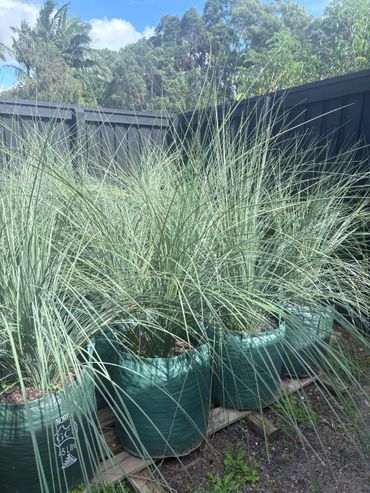
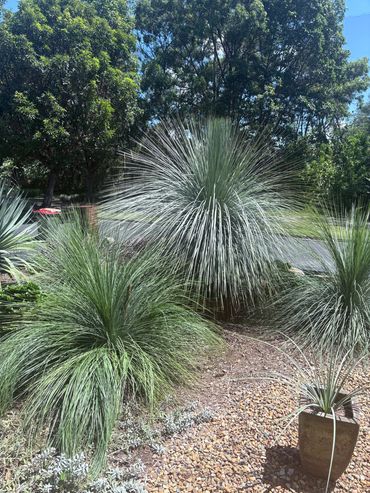
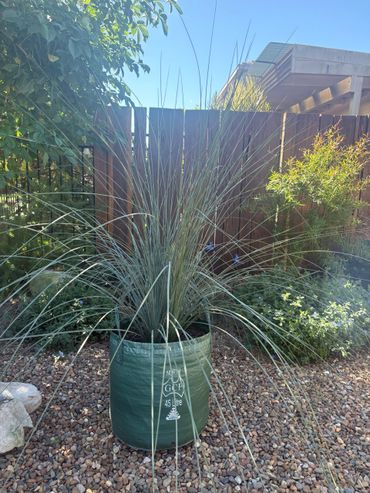
caring for your grass trees

Location
Plant in very well drained soil, in a full sun position in the garden. Position the tree carefully as they don't really like replanting. Plant the crown of the plant slightly above the soil level to help with drainage.
Please make sure the hole you dig drains well - do this by filling the hole with water and seeing how long it takes to drain. If there is still water present in the hole after 48hours consider a different location or build up the site with better drainage material (use sand and gravel at base of hole for example).
Planting
Once you have dug your hole at least twice the width but the same depth as your pot (you want the crown of the plant slightly above soil level), very carefully cut the pot or bag down the sides and through the bottom. Try to avoid cutting the roots if possible. The idea is to keep the root ball intact. Carefully lift the pot or bag (may need two people) into the hole and remove the plastic or bag. Fill the hole with well- draining soil (sand, loamy, garden mix etc).
Watering
When you have planted your Grass tree make sure to water it in well and regularly while the roots settle and begin to grow. Once established Grass Trees can handle dry conditions, but we would advise to continue to water regularly if possible.
Fertilizers
Grass Trees can benefit from a light feed of dynamic lifter or blood and bone in Spring and Autumn. We also recommend a regular application of Seasol. Make sure any other fertilizers used are native specific particularly low in phosphorous.
Pests
Common pests
- Scale - Scale insects are sap-suckers. If they are left unchecked they can kill the tree. Control scale with an application of horticultural oil, but not during hot weather
- Mealybugs - Their development is dependent on temperatures above 25°C with high humidity. Control is best achieved in late October a systemic insecticide such as imidacloprid or acetamiprid.
- Bardi Grubs - these are the larva of the Longicorn beetle (Bardistus cibarius). A decaying trunk or a thick ‘skirt’ of dead foliage provides the perfect environment for attack by these native borers and wood boring moths. The female moth lays her eggs into this foliage and the emerging grubs bore their way into the fibrous centre of the tree. This damage disrupts the tissue that carries water and nutrients to the crown. In severe infestations the tree will rot and fall over. There is not a registered chemical control, but burning of excess foliage (thatch) every 3–4 years will make this an unsuitable haven for pests. Burning off does little damage to the green crown, as it actually promotes growth as it would in a natural fire.
Diseases
Common diseases
- Root rot is a fungal pathogen Phytophthora cinnamonni and related pathogens, cause the roots to rot, preventing the grass tree from taking up water and nutrients. It is usually present in damp or poorly drained soils but will also survive drought. As a result the central leaves wilt and turn brown, causing the crown to collapse and the trunk to rot. Phosphorous acid sprays can be applied in the early stages of decline. However, as the disease may be present without showing symptoms, sometimes control is not successful.
- Anthracnose (Colletotrichum xanthorrhoeae) are first visible as black flecks in the leaf tissue. These flecks develop to encompass the entire leaf and will spread to the rest of the crown. Apply mancozeb to protect leaves from further infection. However, if the disease has progressed too far, control may be ineffective.
Other factors contributing to decline
- Run-off from lawn phosphate fertilisers into garden beds.
- Transplant shock. This may take months to appear and is more common during summer.
- Insufficient drainage in clay soils causing waterlogging.
- Mulching too close to the trunk.
- Drought stress.
- Saline bore water.
Step into Our World: A Grass Trees Queensland Photo Collection